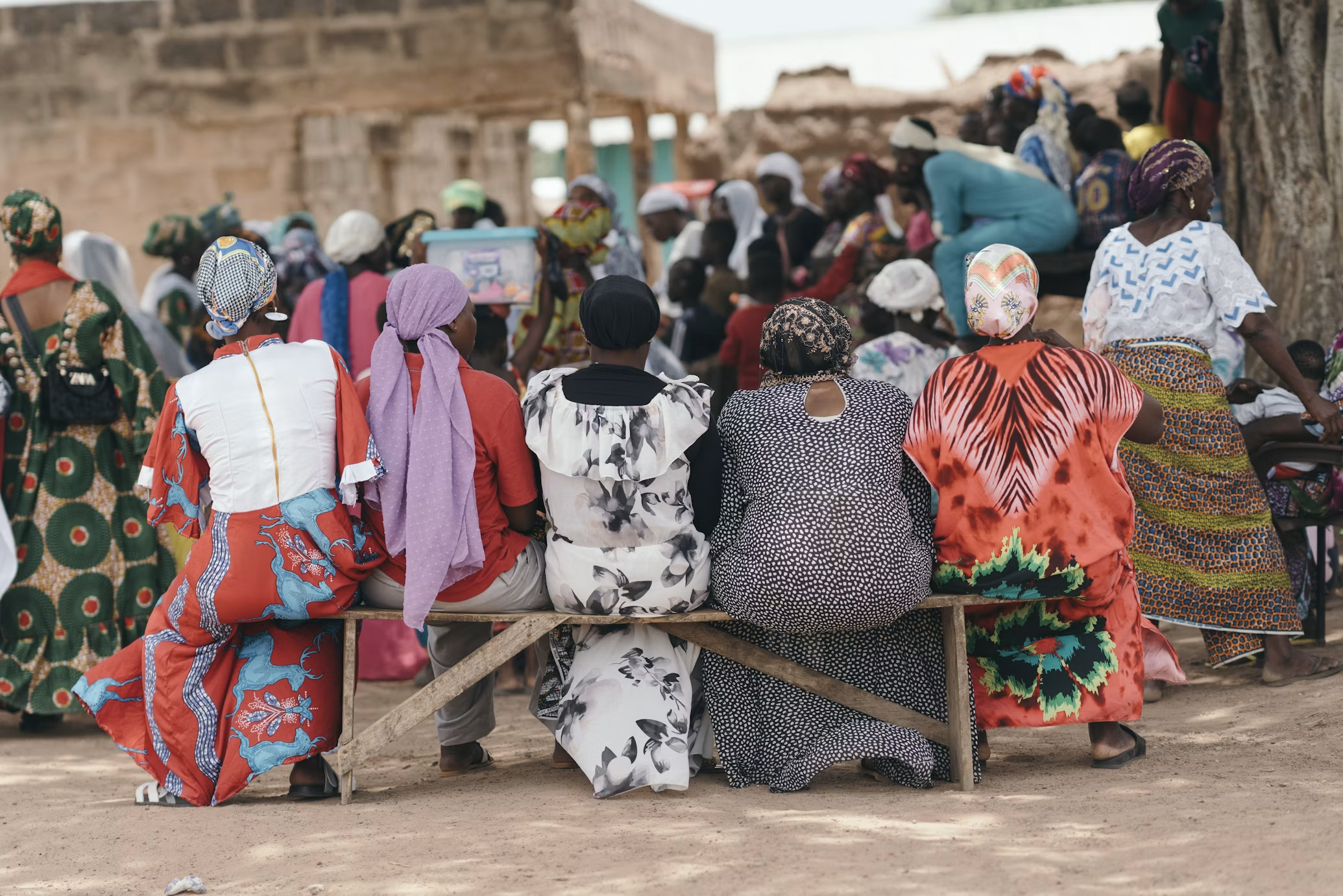
For many people living in Salaam, South Sudan, the effects of conflict have shaped everyday life for years.
The community includes internally displaced people, returnees and host communities, many of whom were affected by the 2013 conflict and left their homes in search of safety. In that environment, relationships between people from different tribal backgrounds have not always come easily.
Through Global Mission Partners, the Laid Foundation South Sudan (LAFOSS) has been working with the community to strengthen peacebuilding and improve livelihoods.
Between April and June this year, 346 people took part in community awareness training focused on peacebuilding and conflict resolution. The group included 136 women and 210 men.
For some participants, the change began simply by meeting people they would previously have avoided.
Before the training, participants spoke about carrying memories of the 2013 conflict and not mixing with people from other tribes. During the training, they began getting to know one another, exchanging contact details and staying in communication afterwards.
Those relationships are an important part of the project’s approach. Peacebuilding is not treated only as something discussed in a training session, but something practised through everyday relationships and decisions.
Participants reported that the training helped change the way they thought about conflict and gave them a better understanding of peacebuilding and conflict resolution. Some also said they were now using what they had learned to help resolve issues within their own community.
LAFOSS has also created opportunities for people to connect through food distribution and livelihood training. Participants from different tribal backgrounds formed friendships and exchanged contact details.
Some have since begun small-scale farming or other ways of earning an income, including preparing and selling tea, helping families meet needs such as their children’s school fees.
The connection between peace and livelihoods is significant. For families facing displacement, financial pressure and the continuing effects of conflict, greater stability can create space for relationships to grow and communities to work together.
Participants described the change as important not only for adults, but also for children and young people, who are increasingly able to interact in a more peaceful environment.
In a place where conflict has created deep divisions, these changes may begin with something as simple as a conversation, a new friendship or exchanging a phone number.
Through its partnership with LAFOSS, Global Mission Partners is supporting local communities as they build practical pathways towards peace, stronger relationships and more secure livelihoods.