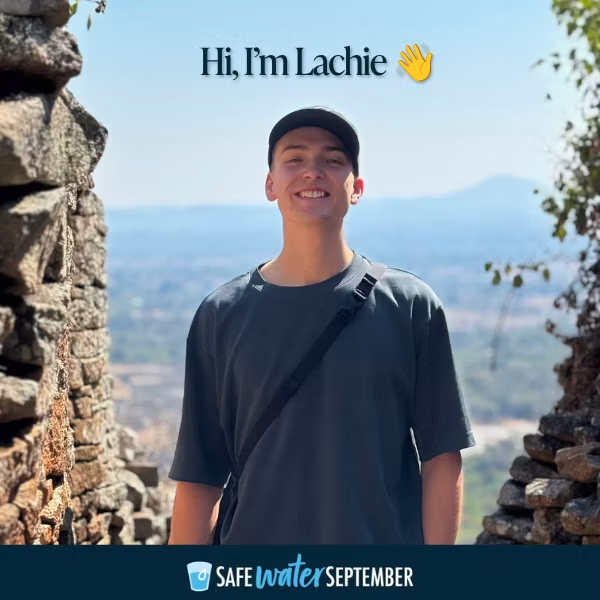
By Lachlan Strybosch
This is my first year running Safe Water September, so travelling to Zimbabwe to meet our partners and see the impact of the campaign firsthand was profoundly eye-opening.
I expected to see the difference safe water could make. I expected to hear stories about healthier communities, easier access to water, and the practical changes that come from having a reliable borehole nearby. What I didn’t expect was to have my understanding of education completely changed.
One of the places we visited was Sinqobile School, a highly remote school in Zimbabwe. It had three buildings, with the foundations of a fourth still waiting to be built. One of the existing buildings contained two classrooms, but it looked like a tornado had gone through it. Because the school didn’t have enough rooms for all the students, they had hung sheets of thin black plastic—looking almost like garbage bags—between the classrooms to create extra learning spaces.
The plastic was full of gaps and offered almost no soundproofing. Students had to stay perfectly quiet so they wouldn’t disrupt the class beside them, and even the teachers struggled to speak over one another.
The poverty was confronting. And yet, the thing that struck me most wasn’t what the school lacked. It was how much the students valued what they had.
When we arrived, the children welcomed us by singing and dancing. Class representatives stood up and recited poems about how education was life, how it gave them dignity, and how it offered them a path out of poverty. They were genuinely grateful to be at school.

That was humbling for me. I found myself thinking back to all the times I had complained about school growing up, taken it for granted, or simply wished I didn’t have to be there. These children were walking kilometres every day because they understood just how valuable the opportunity to learn was.
Then, the principal explained something that changed the way I thought about water.
Many of the children walk 8 to 10 kilometres just to reach the school. The location is so remote that teachers either live on site or travel for hours together just to get there. In an environment like that, water isn’t simply something that makes the school day more comfortable.
The Difference Water Makes
Before travelling to Zimbabwe, I assumed that if a school didn’t have access to water, the children would simply be thirsty. That is obviously true—but it goes much deeper than that.
After walking kilometres through a hot, dry environment, children need somewhere they can drink and wash. Without water waiting for them when they arrive, they become dehydrated and can’t concentrate. If they have another long walk home ahead of them, attending school at all becomes not only exceptionally difficult, but dangerous. Education might be available, but without water, children simply cannot access it.
Thankfully, this particular school did have water.
A few years earlier, funds raised through Safe Water September had helped provide a borehole, and the school community was incredibly proud to show us what they had done with it. They weren’t wasting a single drop.
Around the borehole, they had created gardens and planted trees to help protect the school from the wind. They even designed a simple system so that any water spilled while children drank or washed was channelled directly into the soil. That runoff was helping them grow vegetables, which were then used to feed hungry students or sold at the local market to generate income.

Standing there, I could see the true impact of safe water right in front of me.
- It wasn’t just a borehole.
- It was drinking water after an 8-kilometre walk.
- It was a garden.
- It was food for hungry children.
- It was income for the school community.
Most importantly, it was the thing that allowed these children to keep receiving an education they so clearly treasured.
I was emotional standing there, but I also felt incredibly hopeful. These kids knew education could help shape their future. Their teachers knew it. Their principal knew it. And for the first time, I understood clearly that access to safe water was making that future possible.
That’s exactly why I’m taking part in Safe Water September this year.
For one month, the challenge is simple: drink only water and raise funds to help provide safe water to communities that need it. It might feel like a small sacrifice from here in Australia, but after seeing where the money goes, I know the impact is anything but small.
Safe water changes lives in very practical, very direct ways. It can literally be the difference between a child receiving an education or not.
This September, I’d love you to join me. Take the Safe Water September challenge, raise what you can, and help make safe water—and everything that comes with it—possible for more communities.